
One-U RAI Welcomes 12 New Faculty Fellows Driving Responsible AI Across Disciplines
The University of Utah One-U Responsible Artificial Intelligence Initiative (One-U RAI) at the Scientific Computing and Imaging (SCI) Institute has named 12 new faculty fellows, nearly double the number of awardees announced last year. This expansion underscores the university’s commitment to rapidly advancing ethical, interdisciplinary AI research that addresses real-world challenges, from expediting emergency medical care to protecting the West’s water supply to systematically embedding ethics in AI education.
Penny Atkins, SCI Institute director of research and science, said the increase brings representation from eight new departments, expanding opportunities for cross-campus collaboration. “We continue to be impressed by both the quantity and quality of applicants and are so excited to see this program grow,” Atkins said. “We hope to expand engagement across campus to include additional departments and colleges in future years.”
The new faculty fellows span 5 colleges and 10 departments and their work is expected to drive progress in the initiative’s thematic areas: environment, health care and wellness, and teaching and learning. Awards may be used flexibly and amount to 25% of a fellow’s base salary, with a maximum award of $75,000 and a minimum award covering the average annual cost of a graduate student in the fellow’s department. Fellowships are awarded for three years and may be renewed following review. Read more about the program.

Ziad Al-Halah
Assistant Professor; Kahlert School of Computing, John and Marcia Price College of Engineering
Thematic Area: Teaching & Learning
Ziad Al-Halah develops efficient multimodal AI assistants that learn with constrained resources and understand text, images, and video. His research addresses key environmental and accessibility challenges in modern AI by reducing supervision costs, lowering power consumption, and creating practical tools for education. For example, his AI assistants can separate audio-visual sources to generate clearer captions for hearing-impaired students or analyze classroom recordings to help users quickly locate specific moments. “I want to enrich students’ and instructors’ experiences and help shape AI as a force for the public good,” Al-Halah said. He also plans to expand this work through a new course on multimodal AI. “By combining cutting-edge research with ethical considerations, my goal is to prepare students not only to innovate in AI, but also to apply it responsibly.”

Emad Awad
Assistant Professor; Department of Emergency Medicine, Spencer Fox Eccles School of Medicine
Thematic Areas: Health Care & Wellness + Teaching & Learning
Emad Awad advances responsible AI in health care, particularly in time-sensitive, high-stakes emergency care. By combining data science with bedside insight, he develops transparent and equitable predictive tools, including AI models to forecast emergency department wait times and support rapid clinical decision-making. A cornerstone of his work is the Utah Emergency Department Database, a first-of-its-kind data platform that helps emergency care teams make timely, informed decisions. He is currently piloting this tool at the U and plans to deploy it nationally. “I aim to ensure that predictive tools are transparent, equitable, and clinically meaningful,” Awad said. Through One-U RAI, he will also strengthen training pathways in ethical AI. “I am committed to preparing future health professionals to critically evaluate and responsibly apply AI in practice.”

Mickey Campbell
Research Assistant Professor; School of Environment, Society, and Sustainability, College of Social and Behavioral Science
Thematic Area: Environment
Mickey Campbell uses AI to better understand forests and give wildland firefighters tools for real-time decisions. Campbell, who completed his PhD in geography from the U, uses image and lidar data collected from the ground, air, and space to study Earth systems and how we interact with them. He applies AI to monitor piñon–juniper woodlands, an ecologically important and climatically sensitive ecosystem that spans the West. Another focus, he said, is scalable, precise mapping of forest health changes over space and time. “Drought and insect outbreaks have triggered widespread die-offs, yet current monitoring relies on coarse, manually collected data,” he said. His AI models map tree mortality to track degradation in a changing climate. He also applies his expertise to wildfires, developing tools to enhance firefighter response and safety.
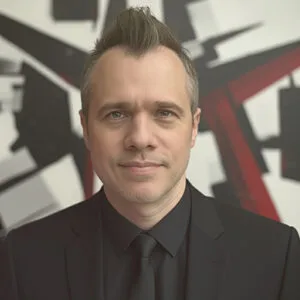
Kenneth Collins
Assistant Professor; Department of Film and Media Arts, College of Fine Arts
Thematic Area: Teaching & Learning
Kenneth Collins uses AI not just to create art but to investigate what it means to be human in a digital age. “Creative research is not peripheral but absolutely central to comprehending AI’s reconstruction of human identity, authorship, and expression in the 21st century,” he said. Collins uses text, image, video, speech, music, and sound-generation algorithms to produce work that sparks dialogue about the ethical and aesthetic implications of AI across disciplines. His AI-driven artworks have been exhibited internationally, and he pioneered one of the first university courses in AI filmmaking and a companion festival for student work. Through the fellowship, he plans to position Utah as a leader by hosting interdisciplinary workshops, building a “living laboratory” for AI-human collaboration, and launching outreach initiatives that bring AI art experiences to underserved communities.

Nina de Lacy
Assistant Professor; Department of Psychiatry, Spencer Fox Eccles School of Medicine
Thematic Areas: Health Care & Wellness + Teaching & Learning
Nina de Lacy is a physician-scientist and psychiatrist developing explainable AI (XAI) systems that predict health outcomes and show how they reach conclusions, making them trustworthy for doctors and patients. “In my lab, we maintain a relentless focus on translational relevance and acceptability from origin to edge,” de Lacy said. She uses real-world data from wearables, apps, and health records to identify patterns in everyday behaviors, like sleep or movement, that signal changes in health. She co-created RiskPath, open-source software that uses XAI to predict chronic diseases years before symptoms appear. As a fellow, de Lacy will strengthen data infrastructure, advance AI in mental health care, launch a center for XAI in digital health, and co-lead a project that maps personal exposure to environmental factors like temperature and air quality.

Heather Holmes
Associate Professor; Department of Chemical Engineering, John and Marcia Price College of Engineering
Thematic Areas: Environment + Health Care & Wellness
Researchers increasingly use AI for environmental modeling, but physics-based models still outperform AI for predicting extreme events. Heather Holmes wants to bridge that gap. “My domain science background is critical to develop responsible AI tools to protect human health and the environment,” she said. Holmes, who earned her master’s and PhD in mechanical engineering from the U, used her National Science Foundation CAREER award to create a course on high-performance computing and numerical weather prediction. She also co-founded Trace Air Quality, a U startup that provides advanced warnings when pollution events threaten air quality. Through the fellowship, Holmes will use AI to improve wildfire emissions estimates, winter air-quality forecasts, and exposure modeling for extreme events like smoke and heatwaves, strengthening early warning systems and protecting public health.

Ryan Johnson
Assistant Professor; Department of Civil and Environmental Engineering, John and Marcia Price College of Engineering
Thematic Area: Environment
Ryan Johnson leverages AI to safeguard water resources in the drought-prone western U.S., focusing on snow mapping, streamflow monitoring, and predictive modeling to inform water management. “My work is driven by the need to integrate technical innovation with long-term sustainability,” he said. He uses AI-optimized monitoring stations, machine learning, and edge computing—processing data at potentially remote stations, as opposed to the cloud, to allow for real-time analysis. Johnson, who holds a PhD in civil and environmental engineering from the U, recently developed a hydroinformatics course that covers data science and computing while grounding students in responsible AI. As a fellow, he will develop auditable AI models for the Upper Colorado Basin—incorporating demographic data to prevent social or economic biases in decision-making—and create open-source tools to push his field forward.
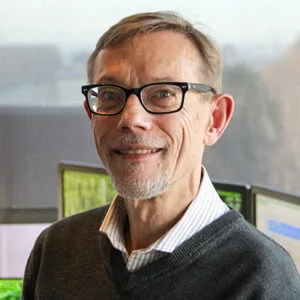
Mike Kirby
Professor; SCI Institute and Kahlert School of Computing, John and Marcia Price College of Engineering
Thematic Areas: Environment + Health Care & Wellness + Teaching & Learning
Mike Kirby brings decades of experience in computing and interdisciplinary research to explore how AI can fairly and transparently serve the public good. His work spans technical innovation and humanistic inquiry, from developing AI-driven models to study voting patterns to co-authoring an in-progress book with inaugural distinguished visitor David Danks on applying medieval philosophy to AI and ethics. “From my early technical contributions in AI development within the engineering sciences to more recent interdisciplinary efforts, I have sought collaborative projects that integrate both technical depth and humanistic breadth,” Kirby said. As a fellow, he will deepen research on AI governance in health care, explore how responsible AI can address environmental challenges, and create educational tools that prepare students, policymakers, and the public to think critically about AI.

Marina Kogan
Assistant Professor; Kahlert School of Computing, John and Marcia Price College of Engineering
Thematic Areas: Environment + Health Care & Wellness
Marina Kogan develops AI systems to extract insights from massive social media datasets, helping officials respond to natural disasters and combating health misinformation. “Applying out-of-the-box AI algorithms without accounting for social context produces biased results, rarely useful to stakeholders,” she said. “I develop AI-based approaches for finding actionable insights in the data deluge.” Kogan co-advises postdoctoral fellow Di Wang, whose project uses natural language processing and computer vision to guide disaster recovery. As a faculty fellow, Kogan will work with Huntsman Cancer Institute colleagues to analyze misconceptions about genetic cancer risk in online forums and evaluate school sun-safety policies aimed at preventing skin cancer. She’ll also build collaborations in mental health, where she can apply essential expertise in developing safe systems that maintain data privacy.

Polina Kukhareva
Assistant Professor; Department of Biomedical Informatics, Spencer Fox Eccles School of Medicine
Thematic Areas: Health Care & Wellness + Teaching & Learning
Polina Kukhareva is a clinical informaticist who uses AI to improve diabetes treatment. Her work focuses on developing rigorous, evidence-based methods that help clinicians choose the most effective medications for patients. Funded by the National Institutes of Health and university research initiatives, she uses large sets of health records to study treatment patterns, predict outcomes, and estimate how different medications affect patients. “I bring a unique perspective as a scientist trained in public health and biomedical informatics who works at the intersection of AI, real-world data, and health care implementation, strengthening the university’s commitment to diverse viewpoints and innovation,” Kukhareva said. As a fellow, she will expand research training through programs such as the Summer Program for Undergraduate Research and the Native American Summer Research Internship.
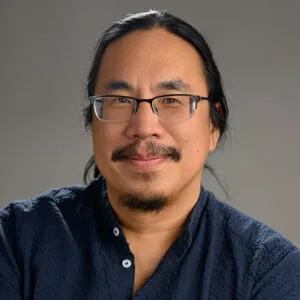
C. Thi Nguyen
Associate Professor; Department of Philosophy, College of Humanities
Thematic Area: Teaching & Learning
“Embedded Ethics” programs that pair computer scientists with philosophers are gaining traction at top universities. Thi Nguyen, a nationally recognized expert in data ethics and the social impacts of technology, wants to bring a tailored version to the U. “One-sided pedagogies are usually flawed,” said Nguyen, who has appeared on The Ezra Klein Show and in Vox’s “2024 Future Perfect 50” list of innovators building a better future. “We’ll develop modules that connect abstract ethical theories directly to issues of design, implementation, and technical development.” His research explores how metrics and algorithms shape human values, and he’s published widely on topics like gamification and the ethics of data systems. As a fellow, he wants to launch a cross-listed computing and philosophy course, an AI ethics certificate, and an AI and data ethics center to foster interdisciplinary research.
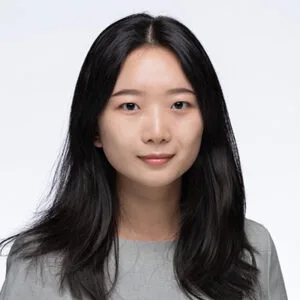
Haoning Xue
Assistant Professor; Department of Communication, College of Humanities
Thematic Area: Health Care & Wellness
Haoning Xue studies how AI can support healthier and more equitable information environments through conversational AI for health information integrity and decision-making. Her work examines how people use conversational AI to seek health information and identifies disparities in effective AI use. She develops value-aligned conversational systems that encourage health behaviors, such as promoting colonoscopy among women and healthy lifestyles among rural residents. She also investigates how people recognize AI-generated videos and designs literacy interventions that help individuals evaluate online content. “My human-centered AI research aims to strengthen users’ digital health literacy and wellbeing and supports One-U RAI’s commitment to ethical and socially grounded AI,” Xue said. As a fellow, she’ll continue her experiments on human-AI interaction and develop her existing curriculum on AI communication.
About the One-U Responsible Artificial Intelligence Initiative
The University of Utah One-U Responsible Artificial Intelligence Initiative (One-U RAI) harnesses the transformative power of AI to benefit society. Launched in October 2023 by President Taylor Randall, the $100 million initiative supports interdisciplinary AI research with real-world impact in three areas where the university has deep expertise: the environment, health care and wellness, and teaching and learning. In addition to growing the university’s pool of AI researchers, the initiative expands cyberinfrastructure and engages the broader community through partnerships and public events. One-U RAI is part of the Scientific Computing and Imaging Institute, which is led by Manish Parashar and has a renowned history in collaborative, translational research.