
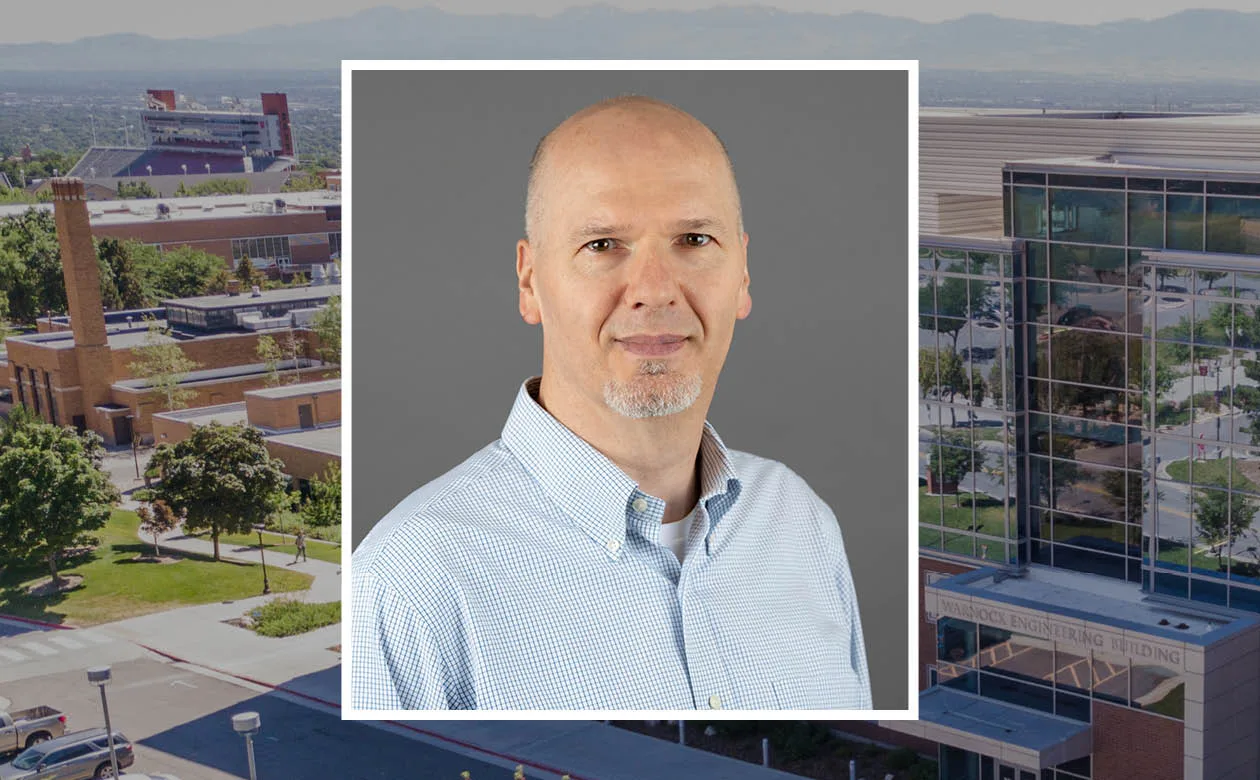
As health-care costs soar, the global population ages, and patient needs grow more complex, biomedical informatics professor Gianfranco Doretto sees artificial intelligence as a powerful solution. His vision: create AI-driven tools that improve outcomes and make care more affordable. Last summer, Doretto joined the University of Utah Scientific Computing and Imaging (SCI) Institute as its first joint hire with the Spencer Fox Eccles School of Medicine, bringing expertise from his role as director of the AI+Health Engineering Center at West Virginia University.
Read more about Doretto and why his work matters.
What’s your primary research area?
My main research area is artificial intelligence, focusing on challenges at the intersection of computer vision and machine learning. This involves using data to teach computers how to perform specific tasks, like identifying objects and their locations in images—a trivial task for humans that took decades of research to enable a computer to do effectively. I also like applying this research to high-stakes fields, especially health care, where the standards for robustness, safety, and trustworthiness are generally higher and require further development. For example, when an image shows human tissue, the objects to identify and locate have biological significance and clinical implications. These factors must be considered because they are crucial for the proper development and safe, reliable deployment of this technology.
Why is your research important?
We are in a more advanced stage of the digital age, where significant progress is expected as computers are programmed to assist humans by leveraging the vast amounts of data constantly generated. One area where this approach could be especially helpful is health care. The cost of health care continues to rise faster than inflation, even as the global population is living longer. At the same time, the average number of years spent in poor health is also increasing, leading to a less healthy population.
Advancing foundational research in AI to develop effective tools that improve patient outcomes while reducing costs offers a promising strategy for addressing this health-care crisis. For example, the continuous improvement of medical therapies has significantly increased the life expectancy of patients with congenital heart disease, leading to a rapidly expanding population of adults living with complex, lifelong health needs. AI tools can help by enabling earlier detection of the condition, thereby improving patient outcomes and supporting the delivery of high-quality, cost-effective care.
What makes you most excited about the work you’re doing?
There are many exciting aspects of this work, from collaborating with, mentoring, and advising talented people to enjoying academic freedom and much more in between. However, the greatest excitement comes when I work with my closest collaborators, usually the students I supervise, and develop new ideas that we find effective and can make a meaningful impact on the field we care about.
What does being a part of SCI mean to you?
It means looking at complex problems that can be tackled by transdisciplinary teams, which cross the boundaries of multiple fields to ultimately benefit society. I find this to be an exciting opportunity, and I am very grateful to be a part of SCI, as this approach aligns well with my research focus.
Why did you become a professor and researcher?
I have always been deeply passionate about technology and science. This passion drove me to excel in school and opened doors to research opportunities as an undergraduate. I was fortunate to publish a few papers before earning my first degree, and this is how I discovered the thrill of creating something new and sharing it, knowing it would contribute to and influence new knowledge. That excitement has stayed with me ever since. Because of this, pursuing a career in academia was an easy decision.
What do you like to do in your free time?
I like watching movies to relax and hiking.