
Scientific Software Environments
Software at the SCI Institute is developed in close collaboration with application users to satisfy real needs within their research communities. We use a robust, yet agile software process that is fully open-source to produce software environments that integrate leading-edge algorithms in image processing, scientific visualization, and scientific computing. Software products developed at the SCI Institute can be categorized in the following ways: Problem Solving Environments (Integrated Modeling, Simulation, and Visualization), Image Analysis, Geometric and Shape Modeling, Simulation, and Visualization.Problem Solving Environments | Image Analysis | Geometric and Shape Modeling | Simulation | Visualization
Problem Solving Environments (Integrated Modeling, Simulation, and Visualization)
FEBio
FEBio is a nonlinear finite element solver that is specifically designed for biomechanical applications. It offers modeling scenarios, constitutive models and boundary conditions that are relevant to many research areas in biomechanics. All features can be used together seamlessly, giving the user a powerful tool for solving 3D problems in computational biomechanics. The software is open-source, and pre-compiled executables for Windows, Mac OS X and Linux platforms are available.More information and links to downloads
SCIRun
SCIRun is a problem solving environment or "computational workbench" in which a user selects software modules that can be connected in a visual programing environment to create a high level workflow for experimentation. Each module exposes all the available parameters necessary for scientists to adjust the outcome of their simulation or visualization. The networks in SCIRun are flexible enough to enable duplication of networks and creation of new modulesMore information and links to downloads
Forward/Inverse Toolkit
The SCIRun ECG Forward/Inverse Toolkit is a collection of modules and networks within the SCIRun system which can be used to solve forward and inverse electrocardiography problems.More information and links to downloads
Brain Stimulator
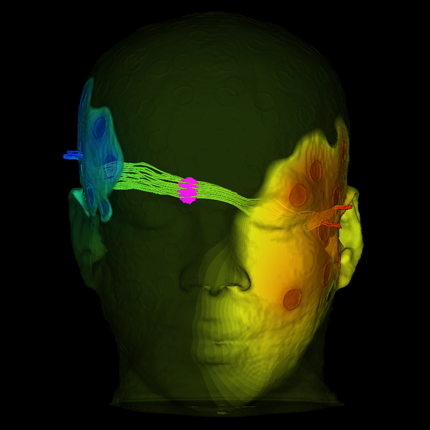
BrainStimulator is a set of networks that are used in SCIRun to perform simulations of brain stimulation such as transcranial direct current stimulation (tDCS) and magnetic transcranial stimulation (TMS).More information and links to downloads
Nektar++
Nektar++ is an open-source software framework designed to support the development of high-performance scalable solvers for partial differential equations (and in particular conservation laws) using the spectral/hp element method. High-order methods are gaining prominence in several engineering and biomedical applications due to their improved accuracy over low-order techniques at reduced computational cost for a given number of degrees of freedom. However, their proliferation is often limited by their complexity, which makes these methods challenging to implement and use. Nektar++ is an initiative to overcome this limitation by encapsulating the mathematical complexities of the underlying method within an efficient C++ framework, making the techniques more accessible to the broader scientific and industrial communities.The software supports a variety of discretisation techniques and implementation strategies, supporting methods research as well as application-focused computation, and the multi-layered structure of the framework allows the user to embrace as much or as little of the complexity as they need. The libraries capture the mathematical constructs of spectral/hp element methods, while the associated collection of pre-written PDE solvers provides out-of-the-box application-level functionality and a template for users who wish to develop solutions for addressing questions in their own scientific domains.
More information and links to downloads
PIDX
The focus of this work is to develop an end-to-end adaptive-resolution data movement framework that provides efficient I/O, while supporting the full spectrum of modern HPC hardware. This is achieved by developing technology for highly scalable and tunable parallel I/O, applicable to both traditional parallel data formats and multiresolution data formats, which are directly appropriate for analysis and visualization. To demonstrate the efficacy of the approach, a novel library (PIDX) is developed that is highly tunable and capable of adaptive-resolution parallel I/O to a multiresolution data format. Adaptive resolution storage and I/O, which allows subsets of a simulation to be accessed at varying spatial resolutions, can yield significant improvements to both the storage performance and I/O time. The library provides a set of parameters that controls the storage format and the nature of data aggregation across the network; further, a machine learning-based model is constructed that tunes these parameters for the maximum throughput. This work is empirically demonstrated by showing parallel I/O scaling up to 768K cores within a framework fexible enough to handle adaptive resolution I/OMore information and links to downloads
Unitah
The Uintah software suite is a set of libraries and applications for simulating and analyzing complex chemical and physical reactions. These reactions are modeled by solving partial differential equations on structured adaptive grids using hundreds to thousands of processors (though smaller simulations may also be run on a scientist's desktop computer). Key software applications have been developed for exploring the fine details of metal containers (encompassing energetic materials) embedded in large hydrocarbon fires. Uintah's underlying technologies have led to novel techniques for understanding large pool eddy fires as well as new methods for simulating fluid-structure interactions. The software is general purpose in nature and the breadth of simulation domains continues to grow beyond the original focus of the C-SAFE initiative.More information and links to downloads
R-Pulsar
R-Pulsar is an IoT Edge Framework, that extends cloud capabilities to local devices and provides a programming model for deciding what, when, and where data get collected and processed. It has been deployed and tested on embedded devices (Raspberry Pi and Android phone) and presents an experimental evaluation that demonstrates that R-Pulsar can enable timely stream analytics by effectively leveraging edge and core resources.More information and links to downloads
DataSpaces
DataSpaces is a programming system targeted at current large-scale systems and designed to support dynamic interaction and coordination patterns between scientific applications. DataSpaces essentially provides a semantically specialized shared-space abstraction using a set of staging nodes. This abstraction derives from the tuple-space model and can be associatively accessed by the interacting applications of a simulation workflow. DataSpaces also provides services including distributed in-memory associative object store, scalable messaging, as well as runtime mapping and scheduling of online data analysis operations.More information and links to downloads
CometCloud
The overarching goal of CometCloud is to realize virtual computational cloud infrastructure that integrates local computational environments and public cloud services on-demand, and provide abstractions and mechanisms to support a range of programming paradigms and real-world applications on such an infrastructure. Specifically, CometCloud provides programming abstractions and underlying mechanisms and services. Furthermore, it enables policy-based autonomic cloud-bridging and cloud-bursting. Autonomic cloud-bridging enables on-the-fly integration of local computational environments (data-centers, grids) and public cloud services (such as Amazon EC2), and autonomic cloud-bursting enables dynamic application scale-out to address dynamic workloads, spikes in demands, and other extreme requirements.More information and links to downloads
Image Analysis
Deformetrica
Deformetrica is a software for the statistical analysis of 2D and 3D shape data. It essentially computes deformations of the 2D or 3D ambient space, which, in turn, warp any object embedded in this space, whether this object is a curve, a surface, a structured or unstructured set of points, or any combination of them.More information and links to downloads
Seg3D
Seg3D is a free volume segmentation and processing tool developed by the NIH Center for Integrative Biomedical Computing at the University of Utah Scientific Computing and Imaging (SCI) Institute. Seg3D combines a flexible manual segmentation interface with powerful higher-dimensional image processing and segmentation algorithms from the Insight Toolkit. Users can explore and label image volumes using volume rendering and orthogonal slice view windows.More information and links to downloads
FluoRender
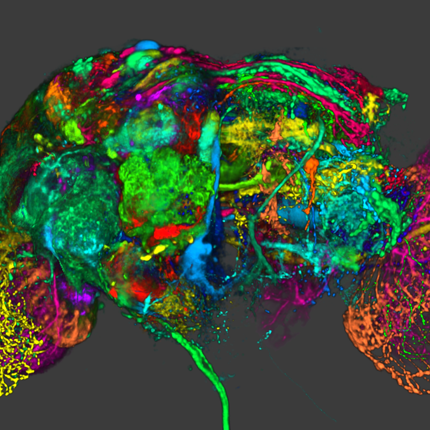
FluoRender is an interactive rendering tool for confocal microscopy data visualization. It combines the rendering of multi-channel volume data and polygon mesh data, where the properties of each dataset can be adjusted independently and quickly. The tool is designed especially for neurobiologists, allowing them to better visualize confocal data from fluorescently-stained brains, but it is also useful for other biological samples.More information and links to downloads
ImageVis3D
ImageVis3D is a new volume rendering program developed by the NIH/NIGMS Center for Integrative Biomedical Computing (CIBC). The main design goals of ImageVis3D are: simplicity, scalability, and interactivity. Simplicity is achieved with a new user interface that gives an unprecedented level of flexibility. Scalability and interactivity mean that users can interactively explore terabyte-sized data sets on hardware ranging from mobile devices to high-end graphics workstations. Finally, the open source nature as well as the strict component-by-component design allow developers not only to extend ImageVis3D itself but also reuse parts of it, such as the rendering core.More information and links to downloads
Slicer
3D Slicer is an open source software platform for medical image informatics, image processing, and three-dimensional visualization. Built over two decades through support from the National Institutes of Health and a worldwide developer community, Slicer brings free, powerful cross-platform processing tools to physicians, researchers, and the general public.More information and links to downloads
FiberViewer
Fiber ViewerLight is an open-source C++ application to analyze fiber bundles. It provides:- Several methods for clustering: Length, Gravity, Hausdorff, and Mean methods but also a Normalized Cut algorithm.
- 3D fibers visualization
- 3D plane selection
FiberViewerLight is available as a 3D Slicer extension
More information and links to downloads
NCR Toolkit
The NCR Toolset Is now included with Seg3D. The Toolset is a collection of software tools for the reconstruction and visualization of neural circuitry from electron microscopy data. This toolset includes Iris, Ir-mosaic, Ir-tweak, and Ir-tools.More information and links to downloads
STCR
STCR is a matlab-based program to reconstruct undersampled DCE radial data, with Compressed Sensing methods.More information and links to downloads
Teem
Teem is a coordinated group of libraries for representing, processing, and visualizing scientific raster data. Teem includes command-line tools that permit the library functions to be quickly applied to files and streams, without having to write any code. The most important and useful libraries in Teem are:• Nrrd (and the unu command-line tool on top of it) supports a range of operations for transforming N-dimensional raster data (resample, crop, slice, project, histogram, etc.), as well as the NRRD file format for storing arrays and their meta-information.
• Gage: fast convolution-based measurements at arbitrary point locations in volume datasets (scalar, vector, tensor, etc.)
• Mite: a multi-threaded ray-casting volume render with transfer functions based on any quantity Gage can measure
• Ten: for estimating, processing, and visualizing diffusion tensor fields, including fiber tractography methods.
More information and links to downloads
Vispack
Vispack is a C++ library developed for processing volumes images and surfaces. We will use it as the foundation for the projects in this course. Vispack relies on standard C++ features such as templates, inheritance, and the standard template library (STD). In the very least Vispack provides image readers and writers and a data structure for accessing image data. It also provides a number of image processing methods. Vispack does not provide any GUI interface to its functionality---it is strictly data structures, algorithms, and image IO.More information and links to downloads
CHM
Cascaded hierarchical model is an image segmentation framework, which learns contextual information in a hierarchical framework. At each level of the hierarchy, a classifier is trained based on downsampled input image and outputs of previous levels. Our model then incorporates the resulting multi-resolution contextual information into a classifier to segment the input image at original resolution. We repeat this procedure by cascading the hierarchical framework to improve the segmentation accuracy.More information and links to downloads
Geometric and Shape Modeling
Cleaver
Cleaver is a multi material tetrahedral meshing API and application. Cleaver generates conforming tetrahedral meshes for multimaterial or multiphase volumetric data. Both geometric accuracy and element quality are bounded. The method is a stencil-based approach, and relies on an octree structure to provide a coarse level of grading in regions of homogeneity.More information and links to downloads
Deformetrica
Deformetrica is a software for the statistical analysis of 2D and 3D shape data. It essentially computes deformations of the 2D or 3D ambient space, which, in turn, warp any object embedded in this space, whether this object is a curve, a surface, a structured or unstructured set of points, or any combination of them.More information and links to downloads
Shapeworks
The ShapeWorks software is an open-source distribution of a new method for constructing compact statistical point-based models of ensembles of similar shapes that does not rely on any specific surface parameterization. The method requires very little preprocessing or parameter tuning, and is applicable to a wide range of shape analysis problems, including nonmanifold surfaces and objects of arbitrary topology. The proposed correspondence point optimization uses an entropy-based minimization that balances the simplicity of the model (compactness) with the accuracy of the surface representations. The ShapeWorks software includes tools for preprocessing data, computing point-based shape models, and visualizing the results.More information and links to downloads
ExoshapeAccel
ExoshapeAccel is a C/C++ application for estimating continuous evolution from a discrete collection of shapes, designed to produce realistic anatomical trajectories.More information and links to downloads
Simulation
FluoRender
FluoRender is an interactive rendering tool for confocal microscopy data visualization. It combines the rendering of multi-channel volume data and polygon mesh data, where the properties of each dataset can be adjusted independently and quickly. The tool is designed especially for neurobiologists, allowing them to better visualize confocal data from fluorescently-stained brains, but it is also useful for other biological samples.More information and links to downloads
GPUTUM
A variety of application domains from geophysics to bio-medicine employ some form of a Hamilton-Jacobi (H-J) mathematical model, as these models provide a natural means of expressing conservation properties. The two most prevalent H-J models seen in the literature are the Eikonal equation (a static H-J model based upon Fermat's Principle for determining minimal paths) and the Level-Set equations (a time-dependent H-J model used for addressing moving interface problems). Both of these sets of equations can be solved very efficiently on structured (lattice) meshes with appropriate upwind-based finite difference schemes. In addition, great strides have been made to map efficient CPU-focused structured mesh H-J formulations to commodity-based streaming architectures such as GPUs. However, many application scientists desire to use H-J formulations because of their conservation properties while at the same time their applications require the use of unstructured meshes because of the meed for geometric-modeling fidelity (for both boundaries and interfaces). Although H-J formulations exist in part for unstructured meshes, their mapping to GPUs is non-trivial due to the indexing (and corresponding data-structures) necessary for non-lattice meshes.More information and links to downloads
SCIRun
SCIRun is a problem solving environment or "computational workbench" in which a user selects software modules that can be connected in a visual programing environment to create a high level workflow for experimentation. Each module exposes all the available parameters necessary for scientists to adjust the outcome of their simulation or visualization. The networks in SCIRun are flexible enough to enable duplication of networks and creation of new modules.More information and links to downloads
FEBio
FEBio is a nonlinear finite element solver that is specifically designed for biomechanical applications. It offers modeling scenarios, constitutive models and boundary conditions that are relevant to many research areas in biomechanics. All features can be used together seamlessly, giving the user a powerful tool for solving 3D problems in computational biomechanics. The software is open-source, and pre-compiled executables for Windows, Mac OS X and Linux platforms are available.More information and links to downloads
Uintah
The Uintah software suite is a set of libraries and applications for simulating and analyzing complex chemical and physical reactions. These reactions are modeled by solving partial differential equations on structured adaptive grids using hundreds to thousands of processors (though smaller simulations may also be run on a scientist's desktop computer). Key software applications have been developed for exploring the fine details of metal containers (encompassing energetic materials) embedded in large hydrocarbon fires. Uintah's underlying technologies have led to novel techniques for understanding large pool eddy fires as well as new methods for simulating fluid-structure interactions. The software is general purpose in nature and the breadth of simulation domains continues to grow beyond the original focus of the C-SAFE initiative.More information and links to downloads
Pfeifer
Preprocessing Framework for Electrograms Intermittently Fiducialized from Experimental Recordings (PFEIFER) is a MATLAB Graphical User Interface designed to process bioelectric signals acquired from experiments. PFEIFER was specifically designed to process electrocardiographic recordings from electrodes placed on or around the heart or on the body surface. Specific steps included in PFEIFER allow the user to remove some forms of noise, correct for signal drift, and mark specific instants or intervals in time (fiducialize) within all of the time sampled channels. PFEIFER includes many unique features that allow the user to process electrical signals in a consistent and time efficient manner, with additional options for advanced user configurations and input. PFEIFER is structured as a consolidated framework that provides many standard processing pipelines but also has flexibility to allow the user to customize many of the steps. PFEIFER allows the user to import time aligned cardiac electrical signals, semi-automatically determine fiducial markings from those signals, and perform computational tasks that prepare the signals for subsequent display and analysis.More information and links to downloads
Visualization
MizBee
MizBee is a multiscale synteny browser for exploring conservation relationships in comparative genomics data. Using side-by-side linked views, MizBee enables efficient data browsing across a range of scales, from the genome to the gene. The design of MizBee is grounded in perceptual principles, and includes several techniques such as edge bundling and layering to enhance visual cues about conservation relationships related to proximity, size, similarity, and orientation.More information and links to downloads
Pathline
Pathline is a visualization tool for comparative functional genomics that supports analysis of three types of biological data at once: functional data such as gene activity measurements; pathway data that presents a series of reactions within a cellular process; and phylogenetic data describing ancestral relationships between species.More information and links to downloads
MultiSum
MulteeSum is a visualization system that supports inspection and curation of data sets showing gene expression over time, in conjunction with the spatial location of the cells where the genes are expressed -- it is the first tool to support comparisons across multiple such datasets. MulteeSum is part of a general and flexible framework that allows biologists to explore the results of computations that mix spatial information, gene expression measurements over time, and data from multiple species or organisms. MulteeSum was developed to support the research activities of biologists studying developing Drosophila embryos.More information and links to downloads
inSite
inSite is a tool for interactively visualizing binding sites along multiple genomic regions. Different types of transcription factors are encoded with color with a user-defined, interactive color legend.More information and links to downloads
HDVis
An important goal of scientific data analysis is to understand the behavior of a system or process based on a sample of the system. In many instances it is possible to observe both input parameters and system outputs, and characterize the system as a high-dimensional function. Such data sets arise, for instance, in large numerical simulations, as energy landscapes in optimization problems, or in the analysis of image data relating to biological or medical parameters. This paper proposes an approach to analyze and visualizing such data sets. The proposed method combines topological and geometric techniques to provide interactive visualizations of discretely sampled high-dimensional scalar fields. The method relies on a segmentation of the parameter space using an approximate Morse-Smale complex on the cloud of point samples. For each crystal of the Morse-Smale complex, a regression of the system parameters with respect to the output yields a curve in the parameter space. The result is a simplified geometric representation of the Morse-Smale complex in the high dimensional input domain. Finally, the geometric representation is embedded in 2D, using dimension reduction, to provide a visualization platform. The geometric properties of the regression curves enable the visualization of additional information about each crystal such as local and global shape, width, length, and sampling densities. The method is illustrated on several synthetic examples of two dimensional functions. Two use cases, using data sets from the UCI machine learning repository, demonstrate the utility of the proposed approach on real data. Finally, in collaboration with domain experts the proposed method is applied to two scientific challenges. The analysis of parameters of climate simulations and their relationship to predicted global energy flux and the concentrations of chemical species in a combustion simulation and their integration with temperature.More information and links to downloads
map3d
Map3d is a scientific visualization application developed at the CVRTI to display and edit complex, three-dimensional geometric models and the scalar data associated with those models. map3d was originally written in ANSI-C using the Graphics Library (GL) from Silicon Graphics Inc. The map3d interface provides interactive display of both geometry and data assigned to elements of that geometry. The program can read multiple surfaces, each with multiple associated potential/current data files.More information and links to downloads
ElVis
ElVis is a visualization system created for the accurate and interactive visualization of scalar fields produced by high-order spectral/hp finite element simulations.More information and links to downloads
Pathfinder
Pathfinder is a visual analysis tool for the exploration of paths in large networks that was built with Caleydo Web.The analysis of paths in graphs is highly relevant in many domains. Typically, path-related tasks are performed in node-link layouts. Unfortunately, graph layouts often do not scale to the size of many real world networks. Also, many networks are multivariate, i.e., contain rich attribute sets associated with the nodes and edges. These attributes are often critical in judging paths, but directly visualizing attributes in a graph layout exacerbates the scalability problem. In this paper, we present visual analysis solutions dedicated to path-related tasks in large and highly multivariate graphs. We show that by focusing on paths, we can address the scalability problem of multivariate graph visualization, equipping analysts with a powerful tool to explore large graphs. We introduce Pathfinder, a technique that provides visual methods to query paths, while considering various constraints. The resulting set of paths is visualized in both a ranked list and as a node-link diagram. For the paths in the list, we display rich attribute data associated with nodes and edges, and the node-link diagram provides topological context. The paths can be ranked based on topological properties, such as path length or average node degree, and scores derived from attribute data. Pathfinder is designed to scale to graphs with tens of thousands of nodes and edges by employing strategies such as incremental query results.
More information and links to downloads
Vials
Visualizing Alternative Splicing in GenesAlternative splicing is a process by which the same DNA sequence is used to assemble different proteins, called protein isoforms. Alternative splicing works by selectively omitting some of the coding regions (exons) typically associated with a gene. Detection of alternative splicing is difficult and uses a combination of advanced data acquisition methods and statistical inference. Knowledge about the abundance of isoforms is important for understanding both normal processes and diseases and to eventually improve treatment through targeted therapies. The data, however, is complex and current visualizations for isoforms are neither perceptually efficient nor scalable. To remedy this, we developed Vials, a novel visual analysis tool that enables analysts to explore the various datasets that scientists use to make judgments about isoforms: the abundance of reads associated with the coding regions of the gene, evidence for junctions, i.e., edges connecting the coding regions, and predictions of isoform frequencies. Vials is scalable as it allows for the simultaneous analysis of many samples in multiple groups. Our tool thus enables experts to (a) identify patterns of isoform abundance in groups of samples and (b) evaluate the quality of the data.
More information and links to downloads
UpSet
Interactive set visualization for more than three sets.Understanding relationships between sets is an important analysis task. The major challenge in this context is the combinatorial explosion of the number of set intersections if the number of sets exceeds a trivial threshold. To address this, we introduce UpSet, a novel visualization technique for the quantitative analysis of sets, their intersections, and aggregates of intersections.
More information and links to downloads
Caleydo
Caleydo is an open source visual analysis framework targeted at biomolecular data. The biggest strength of Caleydo is the visualization of interdependencies between multiple datasets. Caleydo can load tabular data and groupings/clusterings. You can explore relationships between multiple groupings, between different datasets and see how your data maps onto pathways. Caleydo has been successfully used to analyze mRNA, miRNA, methylation, copy number variation, mutation status and clinical data as well as other datset types.More information and links to downloads
StratomeX
Integrative visualization of stratified heterogeneous data for disease subtype analysis.More information and links to downloads
Entourage & enRoute
Visualizing large & heterogeneous experimental data with enRoute and pathway interdependencies with Entourage.Pathways are graphs that model diverse biological processes on a molecular level. They depict the interaction of genes, proteins and other entities on a semantic level, as a small subset out of the overall biological network. These subsets are curated for their functional relevance and are mostly generic for an organism or a specific disease state. While this subsetting approach is necessary to deal with the complexity of the networks, there are many situations where a broader view is desirable, for example when investigating side-effects of drugs. Furthermore, it is necessary to understand the peculiarites of individual patients, samples, or cohorts with respect to a pathway, as pathways can be modulated, for example, through a disease. The integrated pathway visualization techniques in Caleydo aim to address these challenges. Entourage provides contextual information for a focus pathway by visualizing relevant subsets in other pathways. enRoute visualizes large and heterogeneous experimental datasets for pathways.
More information and links to downloads
LineUp
LineUp is an interactive technique designed to create, visualize and explore rankings of items based on a set of heterogeneous attributes.More information and links to downloads
Domino
Extracting, Comparing, and Manipulating Subsets across Multiple Tabular DatasetsMore information and links to downloads