
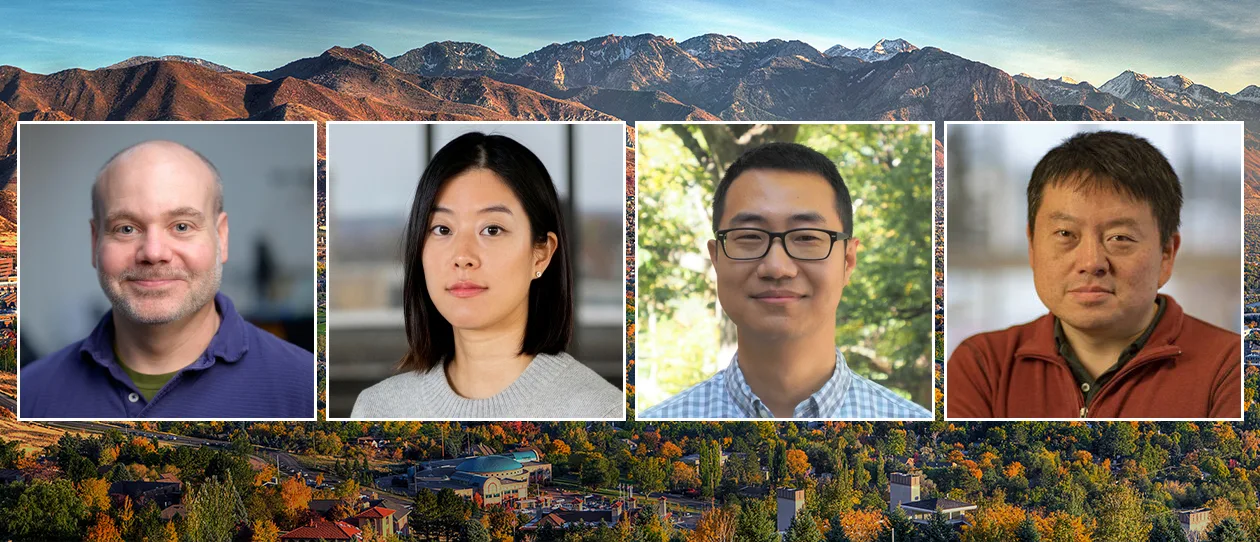
The University of Utah Scientific Computing and Imaging (SCI) Institute welcomes three new faculty members this fall, including cluster hires who will join SCI’s One-U Responsible Artificial Intelligence Initiative. A fourth hire will join next May. These new professors bring expertise in visualization, environmental modeling, atmospheric sciences, and AI-augmented learning environments.
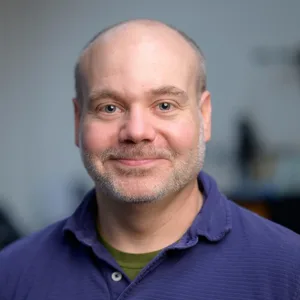
Josh Levine
Associate professor, Kahlert School of Computing
Josh Levine’s research considers how data representation choices affect the scientific computing pipeline, particularly centered around the fields of visualization and data analysis. Scientific simulation is one vehicle to model phenomena that are otherwise impossible to observe, measure, or predict. Nevertheless, it also generates massive data that humans need to interpret, summarize, and communicate. His goals fit within this interdisciplinary effort, and he aims to bridge these gaps by both using and developing new theoretical and computational methods.
Levine is excited to return to SCI, where he worked as a postdoctoral research associate under Valerio Pascucci and Ross Whitaker from 2009 to 2012. After that, he held faculty positions at Clemson University (2012–2016) followed by the University of Arizona (2016–2026). Levine received his Ph.D. in computer science from The Ohio State University in 2009 after completing B.S. degrees in computer engineering and mathematics in 2003 and an M.S. in computer science in 2004 from Case Western Reserve University. He is a recipient of the 2018 U.S. Department of Energy Early Career Research Program award.
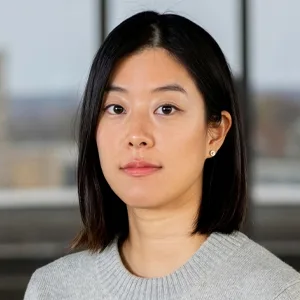
Jihyun Rho
Assistant professor, Department of Educational Psychology
Jihyun Rho, the first teaching and learning cluster hire for SCI’s One-U Responsible Artificial Intelligence Initiative, examines how people learn from and reason with visual information, and how generative AI is reshaping this visual sense-making. She studies how learners build and revise the structures they use to interpret visual information, and how AI tools shape what learners see, notice, and understand. Her research interests span visual-based learning, data visualization education, and generative AI in education. Before joining the University of Utah, Rho worked as a postdoctoral researcher at the University of Florida. She earned her Ph.D. in learning sciences from the University of Wisconsin–Madison’s Department of Educational Psychology.
He Yin
Associate professor, School of Environment, Society & Sustainability
He Yin, the first environment cluster hire for SCI’s One-U Responsible Artificial Intelligence Initiative, is an expert in Earth observation for environmental monitoring. He integrates remote sensing imagery, AI and machine learning, and interdisciplinary approaches to understand environmental change and its consequences for ecosystems and society. His overarching goal is to advance sustainable and just environmental management.
Yin is the principal investigator of projects funded by NASA, the National Science Foundation, Lawrence Livermore National Laboratory, and the Center for International Forestry Research. His research spans armed conflict and its environmental impacts, agricultural land abandonment, natural hazards and disasters, grassland management, and forest monitoring. He also advises United Nations agencies on disaster recovery, reconstruction, and environmental assessment. His recent work on conflict-related environmental impacts has been featured by major media outlets including Al Jazeera, CNN, BBC, The Washington Post, and The Wall Street Journal.

Jingqiu Mao
Professor, Department of Atmospheric Sciences, starting in May 2027
Jingqiu Mao will join the environment cluster for SCI’s One-U Responsible Artificial Intelligence Initiative in May 2027. His work bridges fundamental atmospheric science with applications in air quality management and public health. He focuses on air quality and atmospheric chemistry through the integration of in situ measurements, satellite observations, and chemical transport models. Mao’s recent work emphasizes the use of data science and machine learning to advance environmental monitoring, particularly in data-sparse regions such as the Arctic and sub-Arctic.
Mao is currently a professor of atmospheric chemistry at the University of Alaska Fairbanks, with a joint appointment in the Geophysical Institute and the Department of Chemistry and Biochemistry. He has led and co-led several major field campaigns in Alaska, including studies of wintertime urban pollution and summertime new particle formation in the boreal forest. He is also a longtime member of NASA’s Health and Air Quality Applied Sciences Team and the Steering Committee for GEOS-Chem, a global 3-D model of atmospheric chemistry.